.png)
A practical AEO guide on writing content that ChatGPT, Claude, and Perplexity directly quote as answers—based on real brand testing and expert insights.
Still Thinking SEO Is Enough? Your Customers Are Asking AI Instead.
Search behavior has already changed.
Before:
Google → click → website
Now:
Ask AI → accept the answer
So I ran a simple (and slightly terrifying) test.
I opened Claude and asked:
- “How much does [my brand] cost?”
- “[My brand] vs [competitor] — what’s the difference?”
What I expected:
Claude would pull pricing from my official pricing page.
What actually happened:
Claude cited a 2022 Reddit thread.
Wrong pricing. Wrong plan details. Completely outdated. ❌
That’s when it hit me:
AI couldn’t see my most important content.
🚨 What Is AEO (Answer Engine Optimization)?
AEO is not about ranking links.
It’s about becoming the answer itself.
The future isn’t:
“How do I rank #1?”
It’s:
“When someone asks AI this question, does it quote me?”
4 Immediate AEO Fixes You Can Apply Today
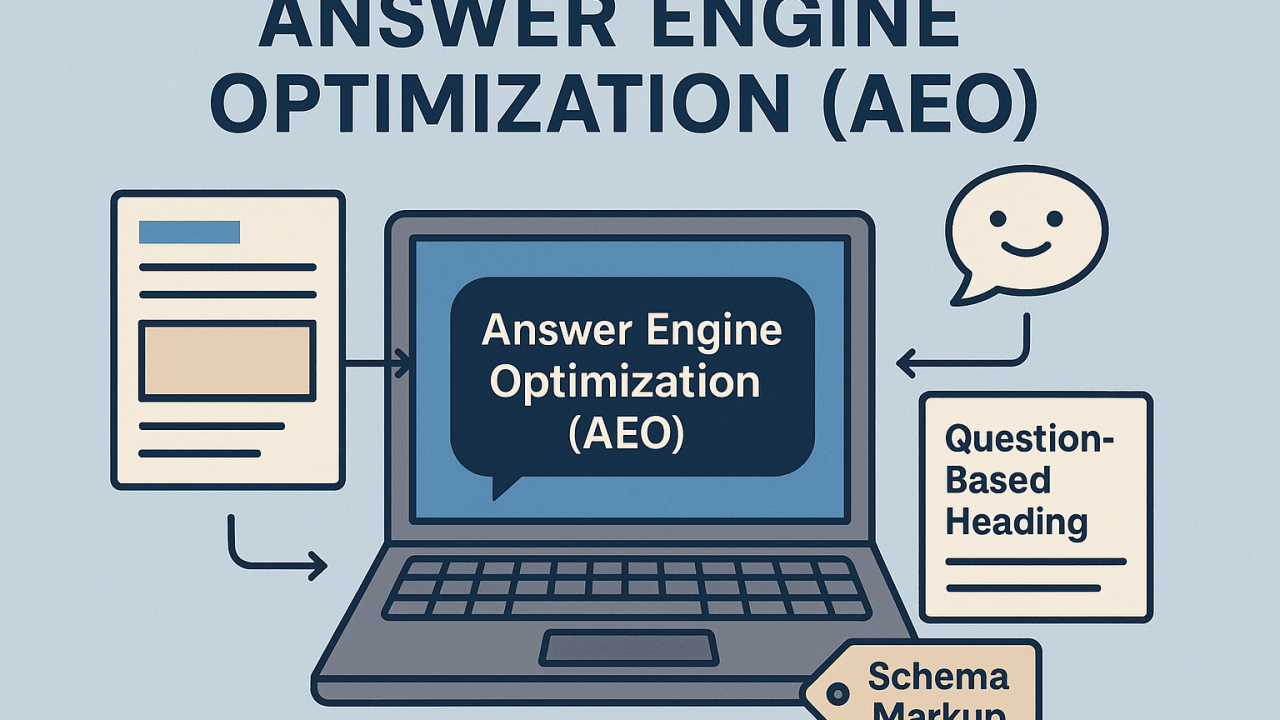
1. Atomize Your Content
One paragraph = one answer.
❌ Long narrative blocks
✅ Short, single-purpose sections
Best practices:
- One idea per paragraph
- Bullet points > prose
- No text walls
LLMs don’t understand content.
They extract content.
2. Answer in the First Sentence (BLUF)
BLUF = Bottom Line Up Front
Example:
Question: “Does coffee sober you up?”
Correct AEO answer:
“No. Coffee does not speed up alcohol metabolism.”
No storytelling. No warm-up.
AI pulls the first clear answer and moves on.
3. AI Trusts Reddit & YouTube More Than Your Website
Most AI citation sources come from:
- Wikipedia
- YouTube
Translation:
If the internet agrees on something—and your site doesn’t say it clearly—AI follows the consensus.
That means:
- Your brand must appear off-site
- Repetition builds “truth signals”
4. JavaScript-Rendered Content = Invisible to AI
This is a silent killer.
If these are JS-rendered only:
- Pricing
- Plans
- Feature comparisons
👉 Many AI crawlers cannot see them.
AEO rule:
- Core facts must exist as plain HTML text
- Visual UI ≠ machine-readable content
The 4 Pillars of an AEO Strategy
Pillar 1: Write for Machines (Content Structure)
AI is a lazy reader.
Help it:
- Identify answers fast
- Copy answers cleanly
Checklist:
- BLUF-first writing
- Short paragraphs
- Bullets and tables
- Clear headers
Pillar 2: Focus on BOFU Content (Decision Queries)
High-impact AEO content lives at the bottom of the funnel.
AI loves answering:
- Pricing questions
- “A vs B” comparisons
- “Which one should I choose?”
Must-have pages:
- Product comparisons
- Who-it’s-for / who-it’s-not-for
- Real FAQs customers actually ask
Pillar 3: Build Consensus (The Raffle Ticket Strategy)
Every platform repeating the same fact = one raffle ticket.
You don’t need virality.
You need consistent repetition.
Where to plant signals:
- Reddit discussions
- YouTube explainers
- “Best tools” listicles
- Digital PR mentions
Pillar 4: Measure & Correct (AEO Audits)
Regularly ask AI:
- “What does [my brand] do?”
- “How much does [my brand] cost?”
- “[My brand] vs [competitor]?”
If AI answers incorrectly:
That’s your highest-priority content fix.
Tools from platforms like HubSpot can help benchmark visibility, but manual testing is essential.
🔑 The Core AEO Mindset (One Sentence)
AEO isn’t a new trick.
It’s answering real questions clearly, everywhere AI looks.
Remember:
- Answer directly
- Structure for extraction
- Repeat across trusted platforms